
The Write to Feel.

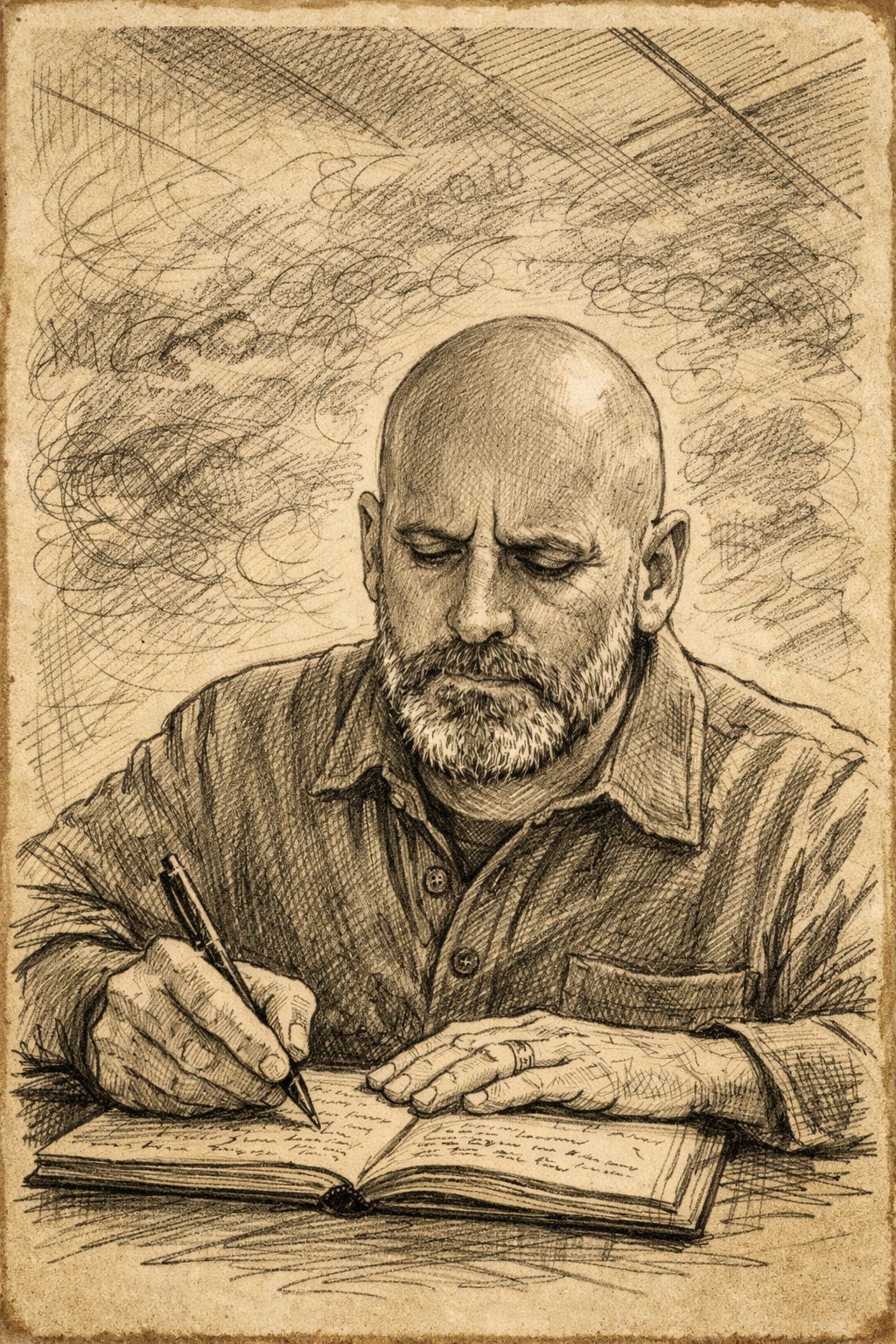
It is late.
The house is finally quiet.
The dishes are done. The phone is face down on the counter. The noise of the day is fading but something inside your chest is still buzzing.
You grab a notebook. Nothing fancy. Just paper and a pen.
You start writing. Not poetry. Not anything polished. Just whatever shows up.
A complaint.
A memory.
A worry that has been circling your mind all day.
Ten minutes pass.
The problems are still there. The bills did not disappear. The argument you had earlier still happened.
But something inside you feels different.
Lighter.
Not fixed. Just… less tangled.
For a lot of people, that simple act of writing things down can shift the emotional weight of a day.
It sounds almost too simple. Yet psychologists have been studying this for decades.
And the results are surprisingly consistent.
Writing can help.
In the late 1980s, psychologist James Pennebaker began studying something called expressive writing.
The idea was straightforward.
Ask people to write about stressful or emotional experiences for about 15 to 20 minutes a day for several days in a row. Encourage honesty. Encourage emotion. No editing. No worrying about grammar.
Just write.
Across many studies, researchers found something interesting.
People who did this kind of writing often reported:
• Small to moderate improvements in mood
• Lower levels of stress
• Reduced depressive symptoms
• Better emotional clarity
Some studies even showed improvements in physical health markers and immune function.
The effects are not magical. They are not dramatic overnight transformations.
But the pattern shows up again and again.
Writing helps many people process difficult experiences.
That matters.
Still, an important note belongs here.
Expressive writing works best as a supplement to mental health care. It does not replace therapy. It does not replace medication when those are needed.
Think of writing as a tool.
One more way to work with your mind instead of feeling trapped inside it.
You might wonder how something as simple as writing could affect your mood.
Several psychological processes seem to be at work.
When difficult experiences stay locked inside the mind, they tend to circle endlessly.
Writing gives emotions somewhere to go.
The page becomes a container for thoughts that otherwise bounce around in your head.
Writing forces the brain to organize experience.
Events that once felt chaotic and sporadic start forming a narrative.
Humans are storytelling creatures. When we find meaning in what happened, the mind relaxes a little.
Rumination is the mental habit of replaying problems without resolution.
Writing slows that loop down.
Once thoughts exist on paper, the brain no longer has to hold them all at once.
The pressure drops.
When people write repeatedly about the same experience, their language often changes.
Early entries may sound raw and confused.
Later entries often show insight, perspective, and understanding.
The story evolves.
That shift can soften emotional pain.
If you want to experiment with writing as a stress relief tool, here is a simple method supported by research.
Nothing complicated.
Just consistency.
The 20-Minute Writing Exercise
Set aside 15 to 20 minutes.
Do this on three or four days this week.
Write about something stressful, upsetting, or emotionally heavy in your life.
Focus on:
• What happened
• What you felt during the experience
• What you think it means for your life
• How it connects to other parts of your story
A few guidelines make this easier.
Write privately.
Do not worry about spelling or grammar.
Do not censor yourself.
Nobody else needs to read it.
You can even throw the pages away afterward.
The value is not in producing good writing.
The value is in letting the mind speak freely.
Expressive writing is helpful for many people, but it is not comfortable for everyone.
Sometimes writing about painful experiences brings emotions to the surface.
That can feel intense.
A few things to keep in mind:
• It is normal to feel emotional while writing about difficult experiences.
• Some people feel temporarily worse before they start feeling better.
• Not every method works for every person.
If writing starts to feel overwhelming, step back.
Take a break. Go for a walk. Talk to someone you trust.
People who struggle with severe depression, trauma, or intense emotional distress may benefit from doing this work with the support of a therapist.
There is no shame in needing guidance.
Writing is a tool, not a substitute for care.
What if I do not know what to write?
Start anywhere.
Write about how your day went. Write about what is bothering you. Write about the fact that you do not know what to write.
Once the pen starts moving, the mind usually follows.
Can writing replace therapy?
No.
Writing can support mental health, but it does not replace professional care. Therapy provides structure, feedback, and expertise that writing alone cannot offer.
Think of writing as one piece of the puzzle.
What if writing makes me cry?
That is a common response.
Emotions often surface when we finally give them attention. Crying during writing does not mean something is wrong. It may simply mean the mind is releasing pressure that has been building.
Still, if the feelings become overwhelming, pause and take care of yourself.
Does it have to be deep emotional writing?
Not always.
Some days you may write about a difficult memory. Other days you may simply unload stress from the day.
Both can help.
Life has a way of filling our heads with unfinished conversations.
Things we wish we had said.
Things we wish had never happened.
Things we still cannot quite understand.
Those thoughts tend to live in the background, quietly draining energy.
Writing gives them a place to land.
It does not erase pain. It does not solve every problem.
But sometimes the act of putting words on paper changes the weight of the story we carry.
If the week feels heavy, try writing for a few minutes.
Not to impress anyone.
Not to create something beautiful.
Just to tell the truth on the page.
You might be surprised what your mind has been waiting to say.
Chew the Fat.
Jason
Annoying I posted a comment and it got lost.. anyway;
I always wrote as a kid but never realised I was using it as therapy, I’d write stories or poetry locked away in my bedroom. But it’s amazing to now, be able to use it on purpose 🧡
Thank you for sharing your words!